Doomsday Clock
Data visualization, humanity's hive mind, collective emotion
Doomsday Clock is a room-sized nervous system listening to the planet. All day and all night it reads the news pouring in from around the world and turns that language into moving images: a living clock face, graphs that rise and fall, word clouds that swell and shrink. Instead of marking seconds and minutes, it measures something more slippery – the current mood of the global conversation.
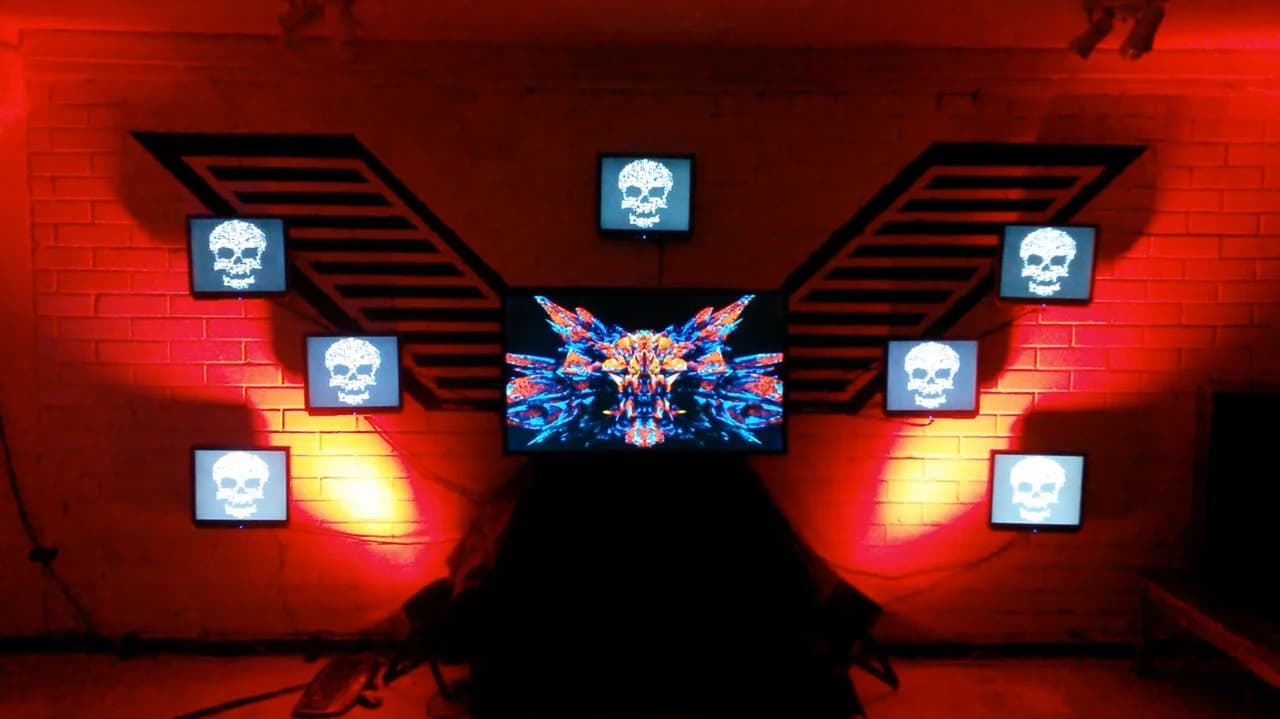
The installation feels like a control room that nobody really controls. Skulls flicker on satellite screens like memento mori for the information age, while the central display blooms into shifting mandalas of data. Headlines stream past like stock tickers, except what’s traded here is fear, hope, outrage, relief. When a disaster hits, you can watch the lines plunge and the colours sour within minutes as outlets around the world pick up the story, repeat it, and sharpen the language. A bomb on the other side of the world redraws the visuals in front of you almost in real time.
Visitors don’t push buttons or trigger effects; their presence is more like sharing a room with the planet’s collective inner monologue. At calm moments the piece hums along, almost meditative. In darker times it becomes heavy, ominous, a reminder of how quickly a single event can flood our information channels and, with them, our emotional landscape.
Doomsday Clock is part of the ongoing trilogy and art experiment Soul Equivalent, an attempt to sketch the "soul" of humanity’s hive mind. Rather than asking what any one person feels, it asks what our species is saying to itself right now – and lets that answer flicker on the screens in light, numbers and restless motion.
Think about it: This <strong>is</strong> an interactive installation.