Artist Statement
Sacred geometry can be found everywhere in nature. You might have picked up a romanesco cabbage at the grocery store, or admired the fractal structure of a plant, watching how its form repeats itself in smaller and smaller copies. Perhaps you've noticed deer antlers or the veins of a leaf, branching in ways that feel complex and yet somehow inevitable.
I often think in terms of two underlying, opposing tendencies in nature. They are emergent patterns that arise from physical laws but feel, from our perspective, like something more. The laws of physics become the tools and boundary conditions through which both tendencies play out.
The first tendency is entropy. Everything in nature tends to spread out, mix and drift apart. The universe itself seems to be expanding, thinning spacetime and slowly pulling everything away from everything else. Entropy is the drift toward sameness – toward a lukewarm, evenly spread-out universe where nothing much happens, where energy has settled as low as it can go.
The second tendency is life. Life feels like a rebellion against that drift. It builds ever-increasing detail and complexity instead of smoothing everything out. To be alive is to draw a line around yourself and say: "This is me, and that is everything else. I am not spread out across the universe, and I want to stay that way."
Yet there is no life without entropy. Not just in the semantic sense of a word defined by its opposite, but literally: life cannot emerge in a perfectly still, static universe. Matter has to be shaken, mixed and driven far from equilibrium for the first fragile patterns to appear. This is the magic of being: how can unliving pieces of matter give rise to a living system? When you zoom in close enough, no single part of you is alive – and yet, taken together, here you are.
I have a feeling that, at a core level, we're all unable to understand the entire picture. We can only enjoy it, observe it, play in it.
I am a child in the vast playground of the universe, and there is nothing to fear.
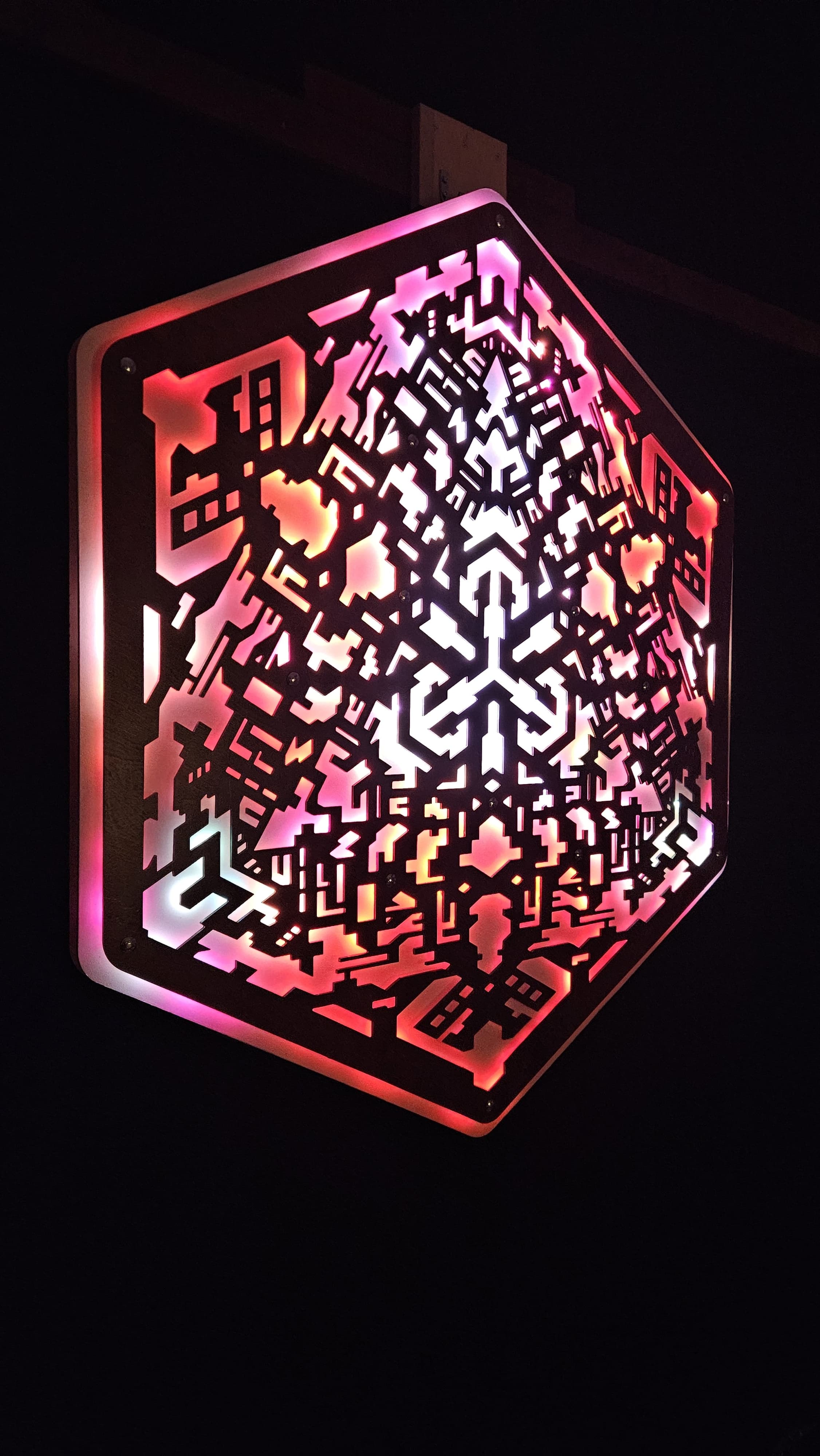
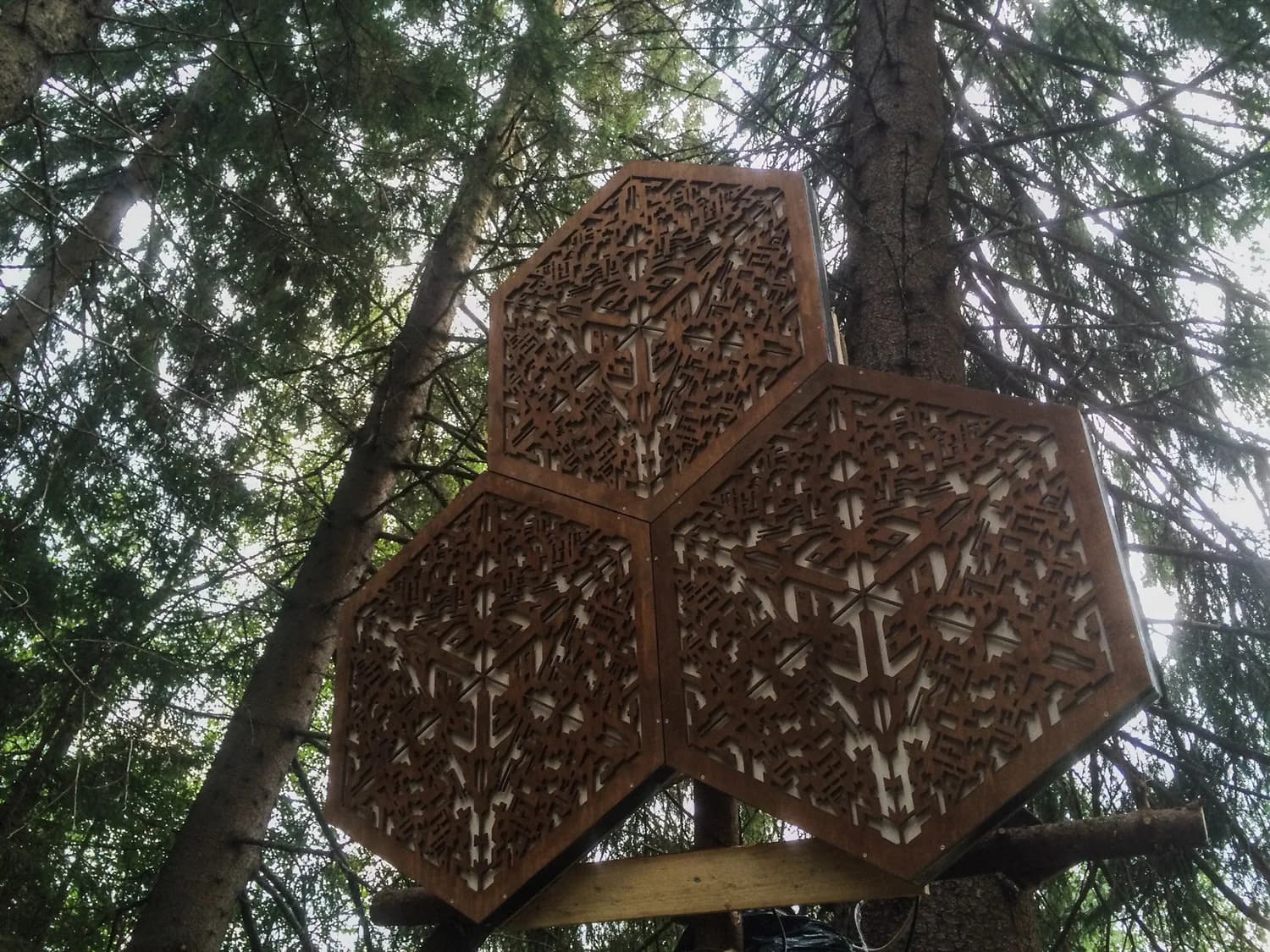
I keep returning to the hexagon. It's one of nature's low-energy solutions: honeycomb cells, soap bubbles, lava fields all settle into hexagonal patterns when matter is simply allowed to relax. For me, that shape is a symbol of the truce between life and entropy. It's entropy's favorite grid, and life's opportunity to draw on top of it.
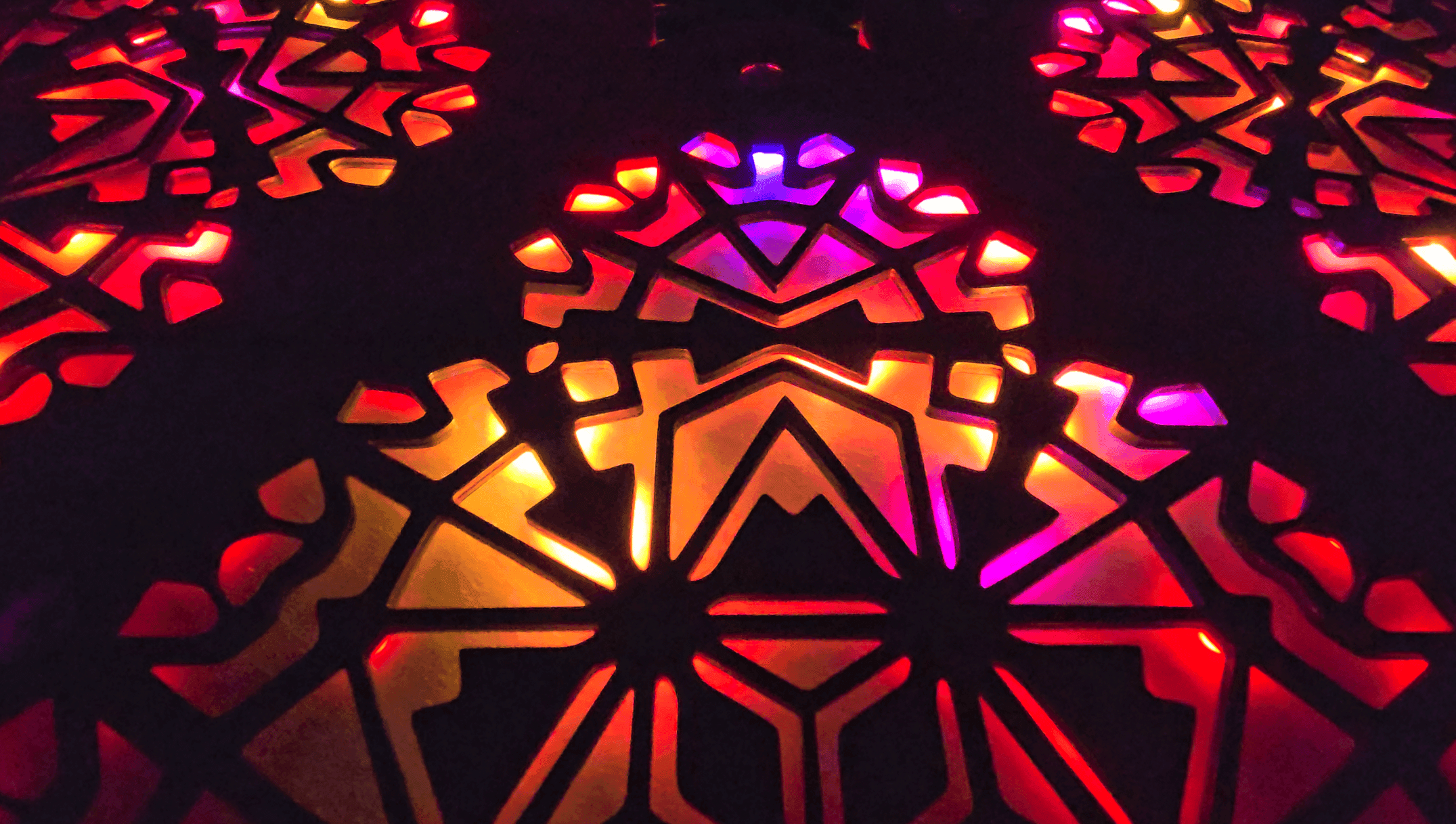
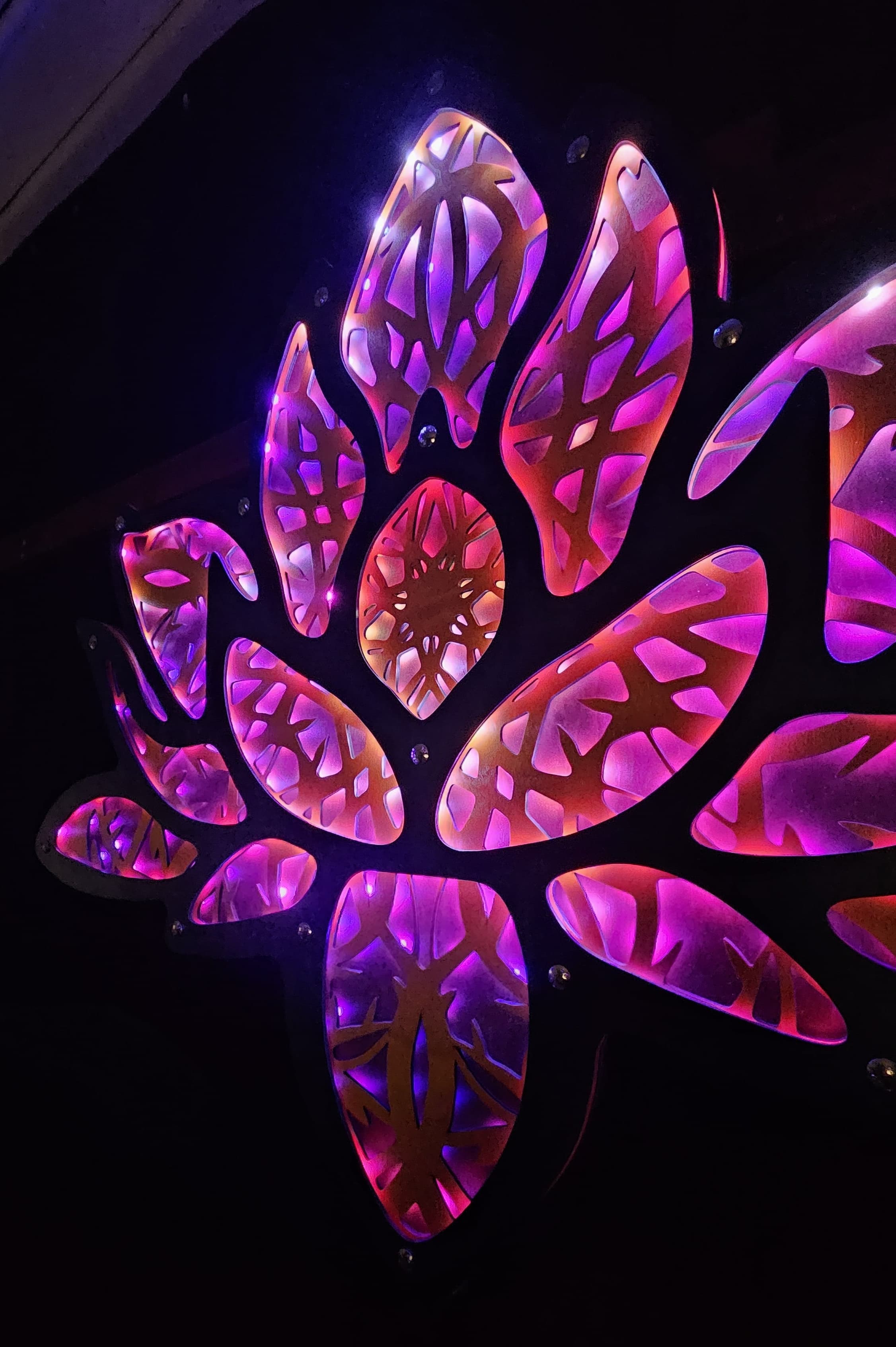
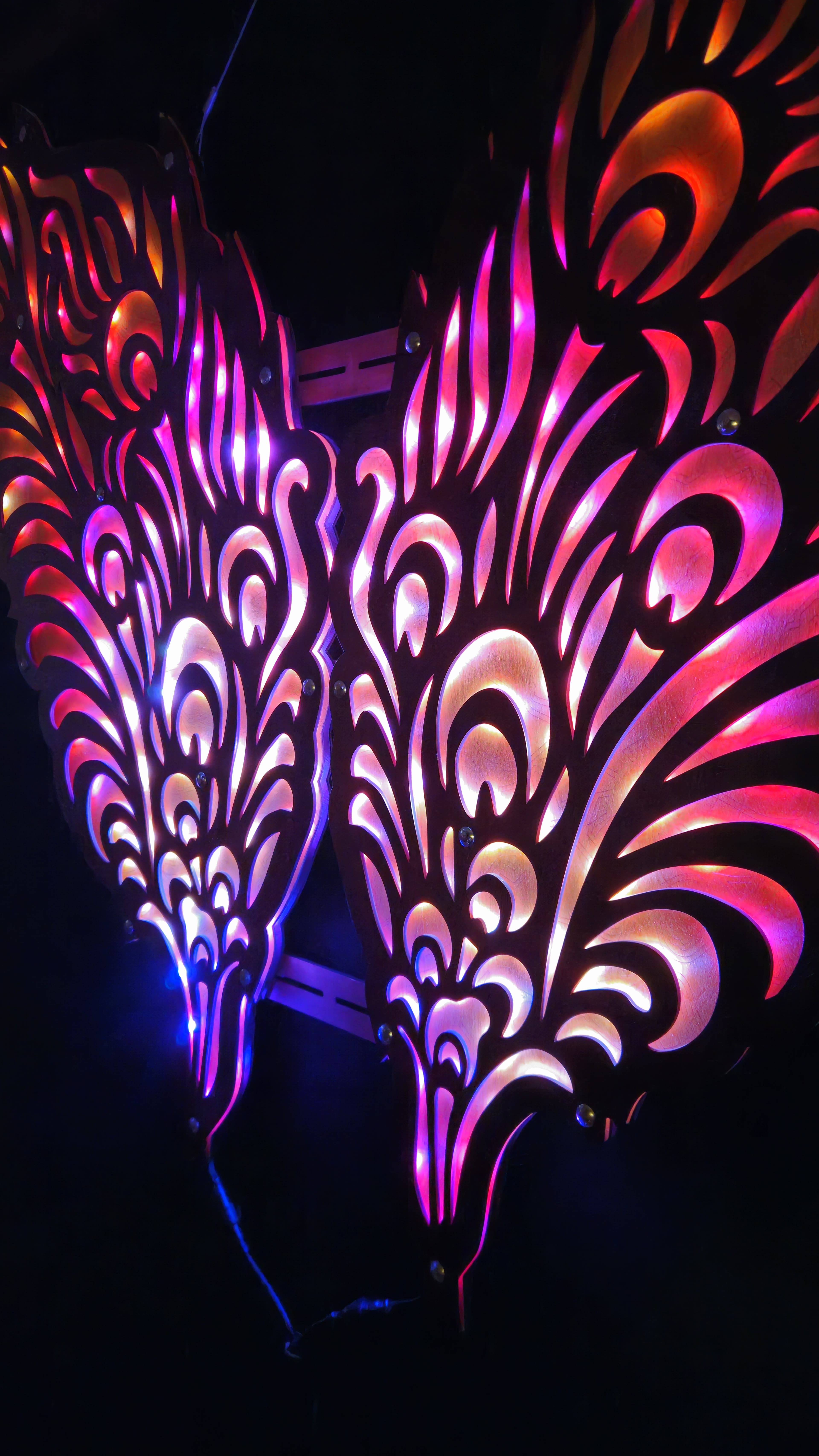
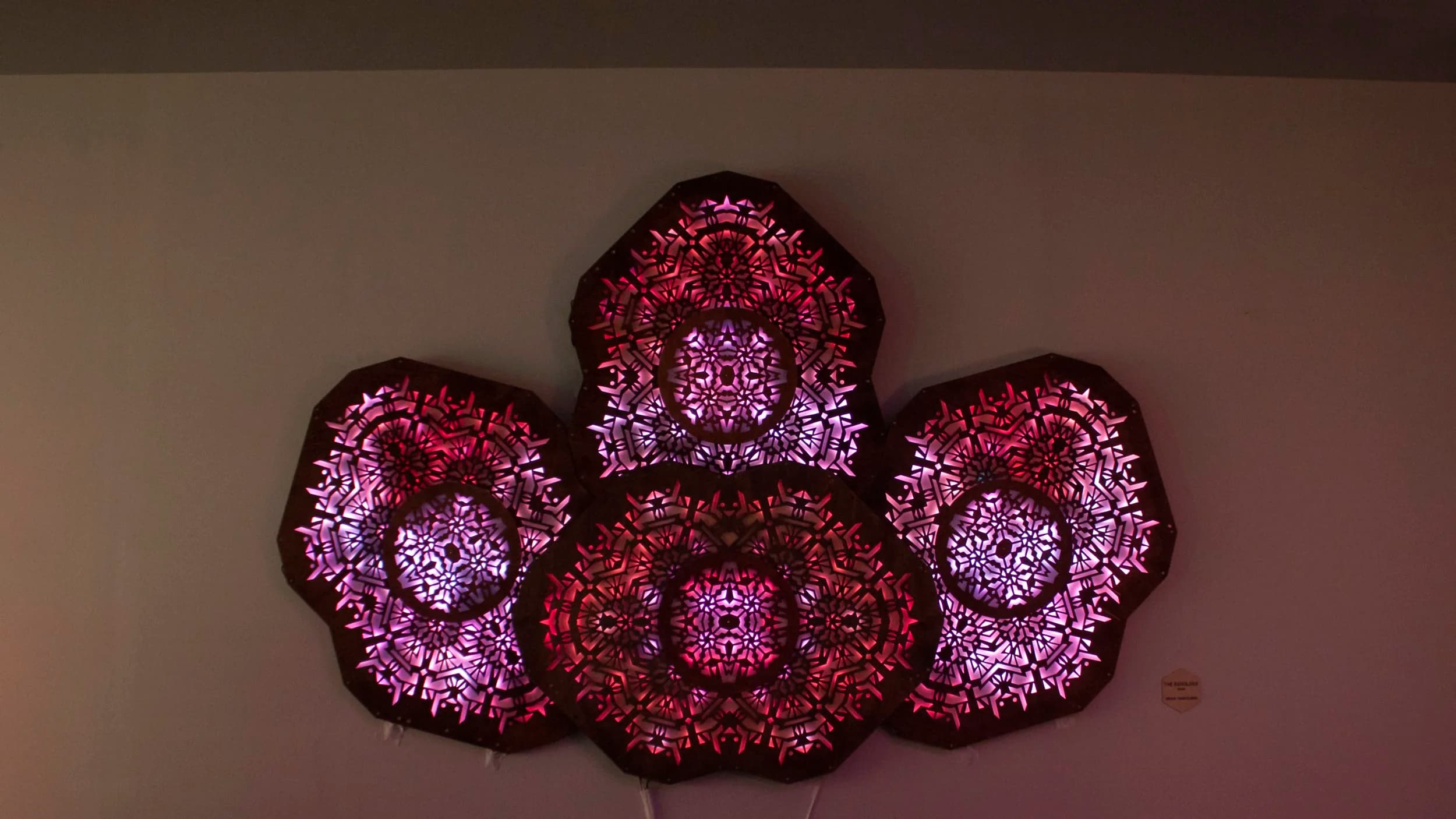
In my art, high technology blends with wooden surfaces. Natural forms take on a more magical quality, and the enchantment of technology, in turn, feels more natural. I work with geometric patterns that echo branching, spirals and waves, and I let code and electronics choreograph the movement of light inside them. When all visible parts of the work are natural – wood and iron – it becomes easier to forget about the processors, transmitters, diodes, wires and other components that inevitably make up much of the magic in my works. When wood conceals technology, the movement of color and brightness can be read as reflections of water or fire, or as shadows of trees swaying in the wind, while the circuits and heat remain hidden beneath the surface, like the unseen physics beneath every living pattern.
In the end, each piece I make is a small experiment in this tension between dispersal and pattern – a temporary pocket of order carved into wood, glowing for a while in a universe that slowly wants to forget.